

Overview
Browser-style devtools that live inside your React Native or Expo app.
Tap a floating button and get a panel of tabs on the device itself. No desktop debugger, no cable, and nothing captured until you switch it on.
npx expo install @axonpack/expo-devtools react-native-safe-area-context react-native-webview expo-clipboard| Tab | What it gives you |
|---|---|
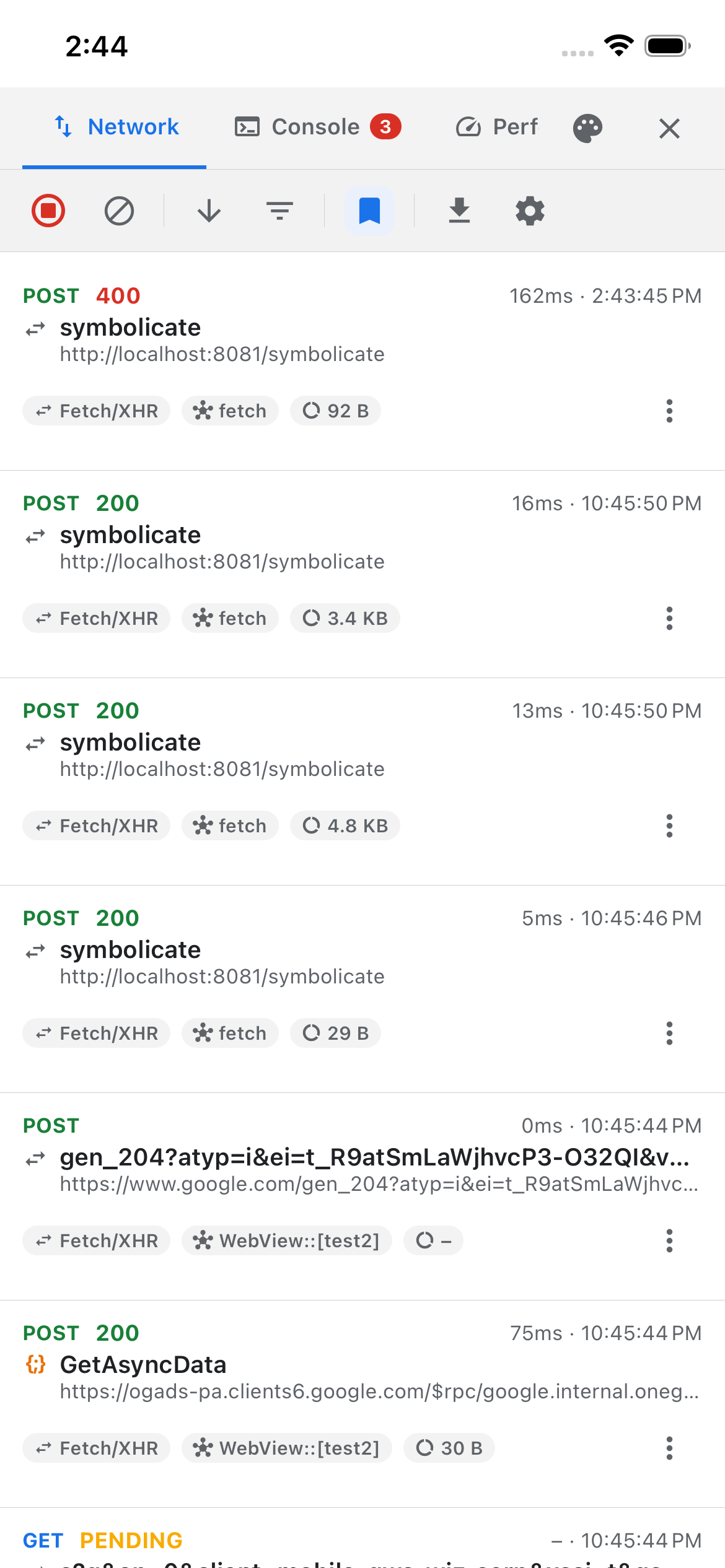
| Network | Every request, searchable, resendable, with connection throttling |
| Console | Every log, plus a > prompt that answers |
| Performance | Frame rate, memory, startup, and the moments the app froze |
| Storage | Every key you have saved. Search it, edit it, import and export it |
| Navigation | Every screen the app moved through, with its params and how long it stayed |
| Crashes | JS errors, unhandled rejections, render errors and native exceptions, as readable reports |
| Debug | Tools that block or crash a thread on purpose |
Network, Console, Performance, Storage, Crashes and Debug are also on your computer, in React Native
DevTools, from one line in metro.config.js.
Two more guides cover things that are not tabs: themes, and capturing inside an in-app browser.
What makes it different
- One native module, on purpose. It is there only for what JavaScript cannot reach at all: the main thread, the real process start time, the phases inside a request, the process's own memory, and an uncaught native exception. Everything else is JS, so the package works in Expo Go with only a handful of readings dark.
- It depends on no storage library. The Storage tab reads the stores you register, which is why adding this package cannot drag AsyncStorage or MMKV into your app.
config.enabledis the only gate. Ship the code freely: with it off, nothing is patched, observed or recorded, and the provider draws nothing but your app.- It states its limits. Every guide here ends with what the tab cannot measure and why, rather than showing a number it had to invent.
Where to go next
Installation
One install command and three peer dependencies.
Compatibility
The versions this is built against, and what it pins you to.
Quick start
Wrap your app in the provider, once, at the root.
Reference
Every control and every option, field by field.
Leaving it in production
What ships, and what stays dark.
Example app
A runnable app that exercises every tab.